


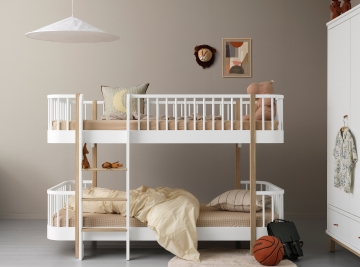
The best bunk beds for Singapore homes fit two European 90cm x 200cm mattresses on a single footprint, carry independent TÜV certification, meet EN 747 for guardrail height and structural load, and are built from solid wood that stays structurally stable in humidity averaging 70 to 80 percent year-round. A bunk bed that meets all four criteria doubles sleeping capacity in a Singapore HDB or condominium bedroom averaging 8 to 11 square metres without compromising the safety or longevity that a decade of daily use by two children demands.
Singapore children’s bedrooms present a specific spatial challenge that a bunk bed solves more efficiently than any other furniture configuration. Two children sharing a room of 8 to 11 square metres with two standard single beds have almost no functional floor area remaining for desks, storage, and the movement space two growing children need. A bunk bed on the same 90cm x 200cm footprint as a single bed accommodates both children vertically, returning the majority of the floor area to the room’s other functions. Kühl Home has been helping Singapore families solve exactly this problem since 2015.

The upper bunk of a bunk bed is not appropriate for all children, and getting this right is the most important safety decision in the bunk bed purchase. The US Consumer Product Safety Commission cites six years as a commonly referenced minimum age for the upper bunk, based on the coordination, spatial awareness, and ladder-use ability required to access and exit the upper sleeping surface safely during the night. This is a guideline rather than a regulation, and parents should assess their individual child’s readiness, coordination, and confidence on a ladder before assigning them the upper bunk regardless of their age.
The lower bunk is suitable from the cot-to-bed transition at approximately 18 months to 3 years, making a bunk bed a practical long-term solution for families with children of different ages sharing a room. An older child of six or above takes the upper bunk while a younger sibling from the toddler transition onwards occupies the lower. As the children grow, the bunk configuration continues to serve both through primary school and, in a quality modular system, through secondary school on the same core frame. The investment made at the toddler stage serves both children for a decade or more without replacement.
A Singapore HDB or condominium bedroom shared by two children presents a spatial problem that a bunk bed solves more completely than any alternative. Two standard single beds in a room of 8 to 11 square metres consume between 70 to 80 percent of the available floor area, leaving insufficient space for two desks, two wardrobes, and the movement space two children need to use the room comfortably. The room becomes a storage and sleeping space rather than a functional bedroom.
A bunk bed on a single footprint accommodates both children and returns the majority of the floor area to the room. In a room of 8 to 11 square metres, this is the difference between a room that functions well for two children and one that does not function adequately for either. The floor area reclaimed by the bunk configuration can accommodate two desks side by side, a shared wardrobe, and adequate movement space for both children to use the room as a genuine living and study environment rather than simply a place to sleep.
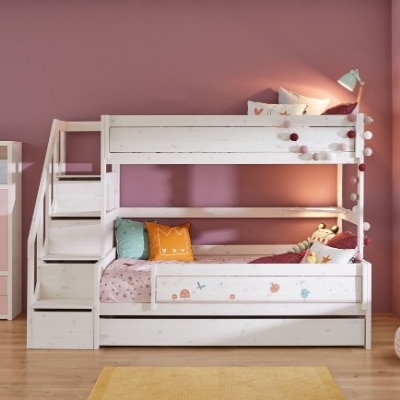
Safety certification is the most consequential decision in a bunk bed purchase, and the standards that apply to an elevated sleeping surface are more stringent than those that apply to a floor-level bed. A bunk bed places a child at significant height above the floor, and the structural integrity of the upper sleeping surface, the guardrail, and the ladder must be verified by independent testing rather than assumed from the product’s appearance. The key standards:
A fixed bunk bed serves one function: two children sleeping in the same room. A modular bunk bed system serves that function and every function that follows it as the children grow and the room’s requirements change. The modular argument is particularly strong for Singapore families because the bedroom that houses two children at age five and eight will need to house two teenagers at age fifteen and eighteen, and the furniture requirements of those two stages are entirely different.
A Lifetime Kidsrooms modular bunk configuration can be separated into two independent single beds when the children no longer want to share a sleeping level. It can be converted so that one child has a loft with a full desk beneath while the other has a standard platform bed. It can be reconfigured as one child moves out of the room and the remaining child needs a different arrangement. All of these transitions use the same core frame, with components added, removed, or repositioned rather than the entire bed replaced. The warranty of up to 15 years on the Lifetime Kidsrooms frame reflects the structural longevity that makes these transitions possible across the full span of childhood.
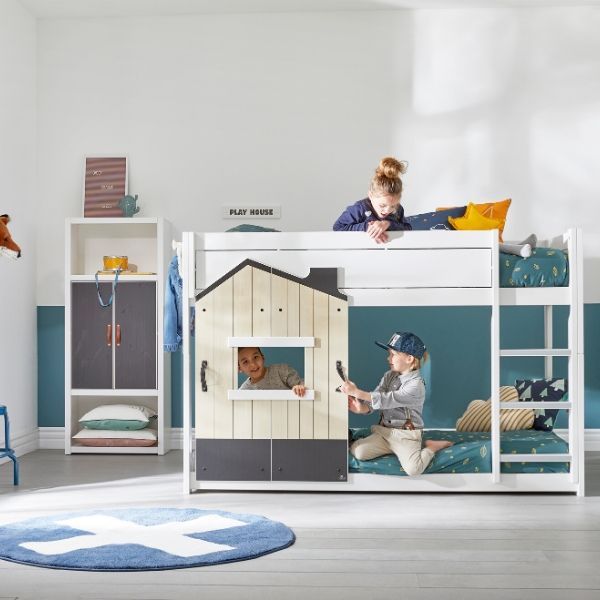
Kühl Home has been helping Singapore families choose bunk beds since 2015, and the conversations that produce the best outcomes are consistently the ones where parents arrive with three pieces of information: the ceiling height of the bedroom, the floor dimensions of the room, and the ages of both children who will use the bed. These three numbers determine which configuration is appropriate, whether the ceiling clearance is sufficient, and which child should occupy which bunk level.
The questions we are asked most consistently at our showroom, and the answers that matter:
The best bunk bed for a Singapore home is one that meets EN 747, carries TÜV certification, is built from solid Scandinavian pine that performs correctly in Singapore’s tropical climate, fits correctly within the ceiling height of a standard HDB or condominium bedroom, and is part of a modular system that continues to serve both children through to secondary school without replacement. It doubles sleeping capacity on a single footprint, returns the majority of the shared bedroom’s floor area to functional use, and costs significantly less over a decade of ownership than the alternatives it eliminates.
Kühl Home carries Lifetime Kidsrooms and Oliver Furniture bunk configurations at our showroom. Both are made in Denmark, TÜV certified, EN 747 compliant, finished in non-toxic paint, and trusted by Singapore families since 2015.
The best bunk beds for Singapore homes fit two European 90cm x 200cm mattresses on a single footprin...
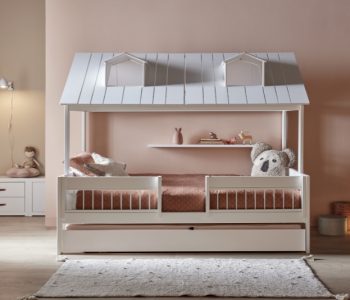
The best kids' single beds for Singapore homes fit a European 90cm x 200cm mattress, carry independe...
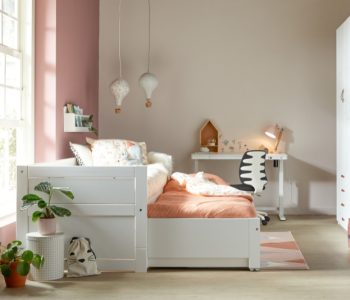
A floor bed is the safer and more developmentally appropriate choice for most children making the co...
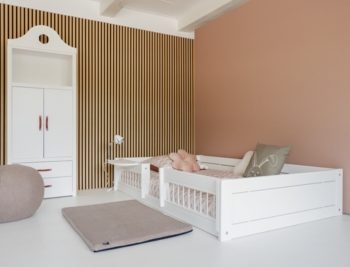
Walk into any Singapore parenting forum or Facebook group today and the Montessori floor bed comes u...
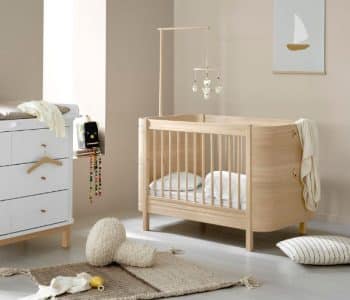
The safest baby cots for Singapore nurseries carry independent TÜV certification, are built from sol...
Choosing a baby cot is one of the first and most consequential furniture decisions new parents make....
Please fill out the form below to receive our Catalogue.
There are no reviews yet. Be the first one to write one.