


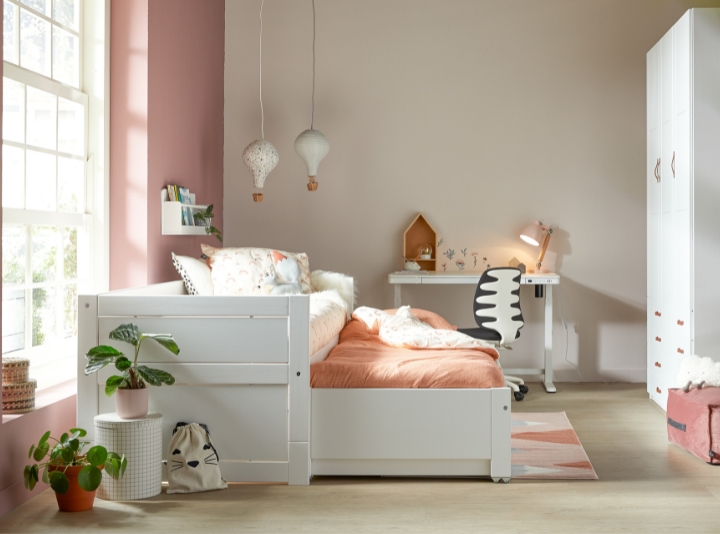
A floor bed is the safer and more developmentally appropriate choice for most children making the cot-to-bed transition between 18 months and 3 years. A toddler bed is a reasonable alternative when the child needs a defined sleeping boundary and the room has adequate floor space for a raised frame with guardrails on both sides.
Singapore nurseries and children’s bedrooms in HDB flats and condominium apartments average just 8 to 11 square metres. In a room of that size, the bed configuration chosen at the toddler transition stage determines how the room functions for the next decade. A floor bed that converts to a platform, mid-sleeper, and loft on the same core frame is a significantly more considered starting point than a dedicated toddler bed that requires replacement within two to three years and adds nothing to the room’s long-term functionality.
A floor bed is a low or floor-level sleeping surface that allows a young child to get in and out independently without adult assistance or risk of falling from height. In its purest Montessori form it is a mattress placed directly on the floor. In a quality modular system it is a low-profile frame sitting between 8 and 20 centimetres from the floor, providing airflow beneath the mattress while maintaining the safety benefit of minimal drop height. The child has full autonomy over their sleeping environment from the first night, which is the core principle of the Montessori approach to early childhood.
A toddler bed is a raised frame designed specifically for the transition years, typically between 18 months and four to five years. It is larger than a cot but smaller than a standard single bed, usually fitting a mattress of approximately 70cm x 140cm. Fixed guardrails on both sides prevent the child from rolling out during sleep. It sits higher than a floor bed, typically between 25 and 40 centimetres from the floor, which introduces a fall risk that the floor bed eliminates. The toddler bed serves the transition years adequately but requires replacement when the child outgrows it, which typically happens within two to three years.
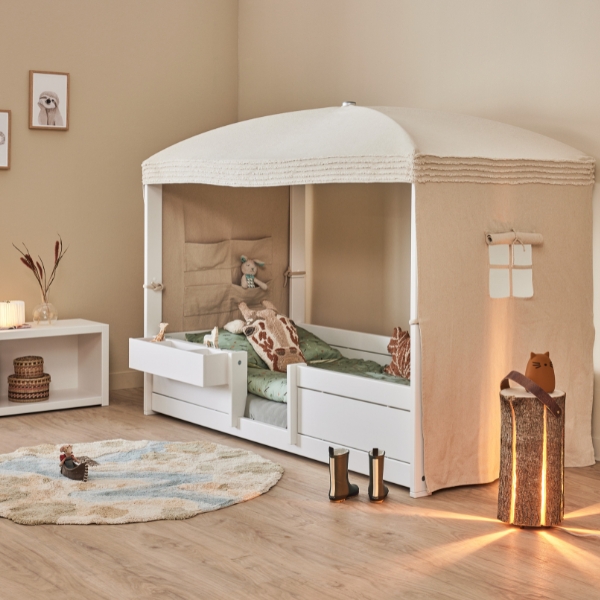
Safety is the primary consideration at the cot-to-bed transition, and on the dimension of fall risk the floor bed has a clear advantage. A child who rolls out of a floor-level or near-floor-level sleeping surface faces a drop of centimetres. A child who rolls out of a raised toddler bed faces a drop of 25 to 40 centimetres, which is meaningfully less than a standard adult bed but not negligible for a child of 18 months to three years. The AAP recommends transitioning when the child begins climbing out of the cot, at which point the cot’s drop height becomes a safety concern and a low bed is the safer option.
The safety considerations for each configuration:
For a floor bed, the primary safety requirement is that the mattress fits the frame precisely with no gap at the sides or ends, which can pose an entrapment risk for young children. The bedroom should be childproofed fully once the child has independent access. Furniture should be secured to walls and electrical points covered. For a toddler bed, the guardrails should be fixed and structurally sound, the frame should carry independent TÜV certification, and the mattress should fit the frame without gaps. The bed should not be positioned near a window or other fall hazard. For both configurations, the mattress should be firm, correctly sized, and free of loose bedding for children under 12 months. For toddlers, standard bedding is appropriate once the child has moved beyond the infant stage.
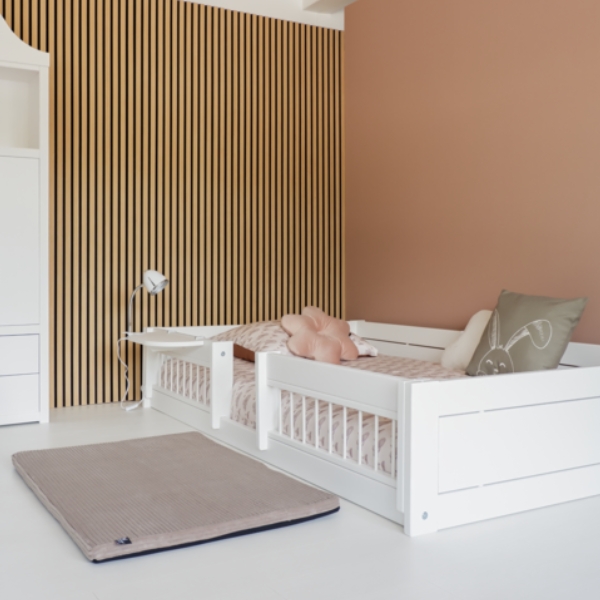
In Singapore’s compact HDB and condominium bedrooms averaging 8 to 11 square metres, the floor bed has a practical advantage over the toddler bed that extends beyond the safety argument. A floor bed’s minimal visual weight and low profile leave maximum floor space for the play and movement area that the Montessori approach specifically prioritises and that a Singapore bedroom of this size genuinely needs to function well.
A toddler bed in a room of 8 to 11 square metres occupies roughly the same floor area as a floor bed but sits higher, giving the room a heavier, more enclosed feeling that works against the sense of openness that small Singapore bedrooms benefit from. More importantly, neither a floor bed nor a toddler bed as a standalone product answers the question of what the child sleeps in at age five, seven, or twelve. A modular system that begins at floor level and converts through every subsequent configuration is the answer to that question, and it is the answer that eliminates the replacement cycle, the room disruption, and the cumulative cost that dedicated transitional beds create.
In Singapore’s tropical climate, the material a children’s bed is made from determines its structural performance across the years of daily use it is expected to provide. This consideration applies equally to floor beds and toddler beds, and it is where the quality differential between certified European furniture and budget alternatives in Singapore’s market is most significant.
The key material considerations for a Singapore children’s bed:
Solid Scandinavian pine stays dimensionally stable in Singapore’s humidity averaging 70 to 80 percent year-round. MDF and composite board absorb moisture at joints and fixings, progressively reducing structural integrity. A toddler bed or floor bed frame that loosens at its joints within two to three years of Singapore’s humidity is both a safety concern and a quality failure. Non-toxic finishes are essential in a bedroom where a young child sleeps for ten to twelve hours daily and will mouth the frame surface. TÜV certification confirms that both the structural integrity and the material safety of the frame have been tested by an independent external laboratory, not self-declared by the manufacturer.
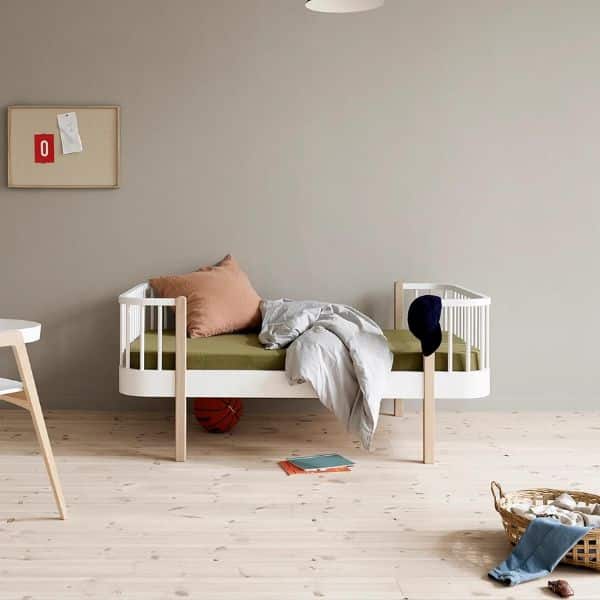
Kühl Home has been helping Singapore families choose children’s beds since 2015. The floor bed versus toddler bed question comes up in almost every conversation with parents of children under three, and our answer is consistent: the question that matters more is not floor bed or toddler bed, but whether the bed you choose at the transition stage is the beginning of a system that serves the child for a decade or a transitional product that requires replacement within two years.
The families who visit our showroom at 100E Pasir Panjang Road and choose the Lifetime Kidsrooms modular system at the floor bed stage almost never return to replace the bed. They return to add components, convert the configuration, or furnish a second child’s room. That pattern of behaviour is what a warranty of up to 15 years and a genuinely modular system is built to support.
What we tell every parent making this decision:
See the floor height in person before deciding. The difference between a frame sitting 8 centimetres from the floor and one sitting 20 centimetres from the floor is significant in practice and is not visible in a product photograph. Bring your room dimensions. We can advise directly on which configuration fits your room, how much floor space it reclaims, and how the system converts at every subsequent stage. Confirm the mattress size before leaving. Lifetime Kidsrooms beds use a European 90cm x 200cm mattress, not the standard Singapore single of 91cm x 190cm. The 10cm difference matters and is an avoidable problem when identified at the point of purchase rather than on delivery day.
For most Singapore families managing compact bedrooms and a long horizon of changing childhood needs, a floor bed that is the entry point of a quality modular system is the more considered choice over a dedicated toddler bed. It is safer at the transition stage, more space-efficient in a Singapore bedroom, and more economical across the decade of use that follows the initial purchase. The toddler bed is a reasonable choice when the modular system is not available or not within budget, but it is a choice that creates a subsequent purchasing decision within two to three years.
Kühl Home carries the Lifetime Kidsrooms and Oliver Furniture ranges at our showroom at 100E Pasir Panjang Road #01-01. Both are made in Denmark from solid Scandinavian pine, TÜV certified, finished in non-toxic paint, and trusted by Singapore families since 2015.
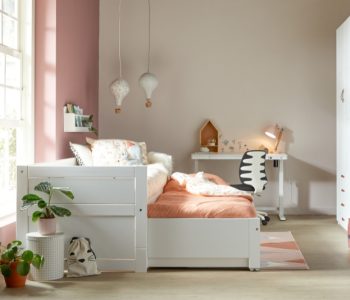
A floor bed is the safer and more developmentally appropriate choice for most children making the co...
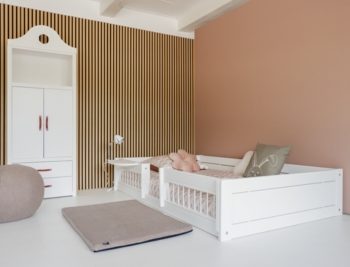
Walk into any Singapore parenting forum or Facebook group today and the Montessori floor bed comes u...
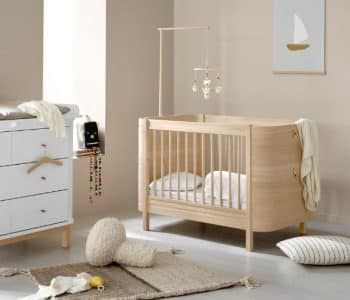
The safest baby cots for Singapore nurseries carry independent TÜV certification, are built from sol...
Choosing a baby cot is one of the first and most consequential furniture decisions new parents make....
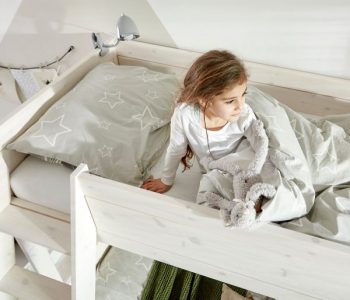
Choose a bunk bed when two children share a room and sleeping capacity is the priority. Choose a lof...
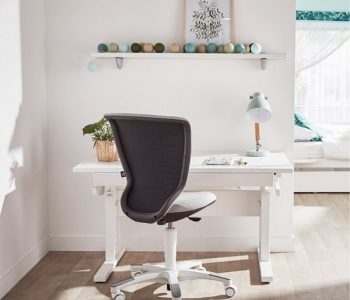
The shift towards home learning in Singapore has quietly changed what a child’s bedroom or study spa...
Please fill out the form below to receive our Catalogue.
There are no reviews yet. Be the first one to write one.