


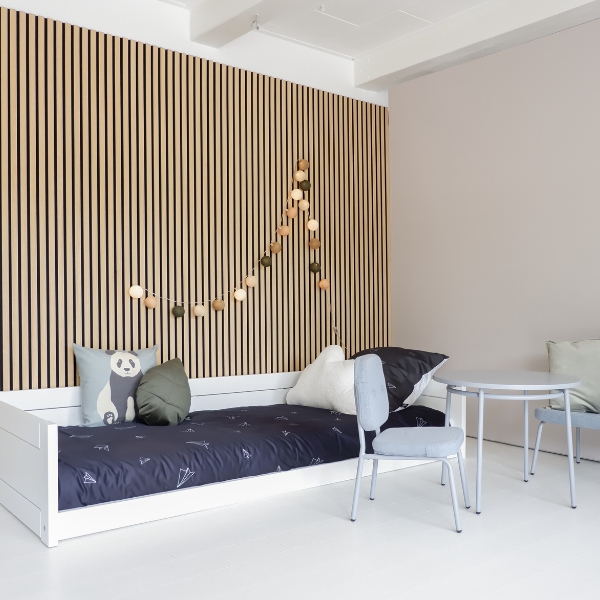
A Montessori bed is a low or floor-level bed designed to allow young children to get in and out independently, without adult assistance or risk of falling from height. Rooted in the Montessori educational philosophy of fostering a child’s autonomy and freedom of movement, it is widely used as the first bed after the cot transition and is particularly well-suited to toddlers from around 18 months onwards.
A Montessori bed is defined by its proximity to the floor rather than by any specific design or brand. The core principle is that the sleeping surface should be low enough for the child to climb in and out without help, giving them independence and reducing the risk of injury from a fall during the night. In its purest form, a Montessori bed is a mattress placed directly on the floor. In practice, most families use a low-profile frame — typically between 10 and 20 centimetres off the ground — which keeps the mattress clean, allows airflow beneath it, and provides a defined sleeping space the child recognises as their own.
The Montessori approach to the child’s bedroom extends beyond the bed itself. The room is arranged at the child’s level — books, toys, and clothing stored within reach — to support the same independence that the bed is designed to encourage. The bed is the starting point for that philosophy, and for many Singapore parents it is the first conscious step toward a child’s room that works with the child rather than around the adults.
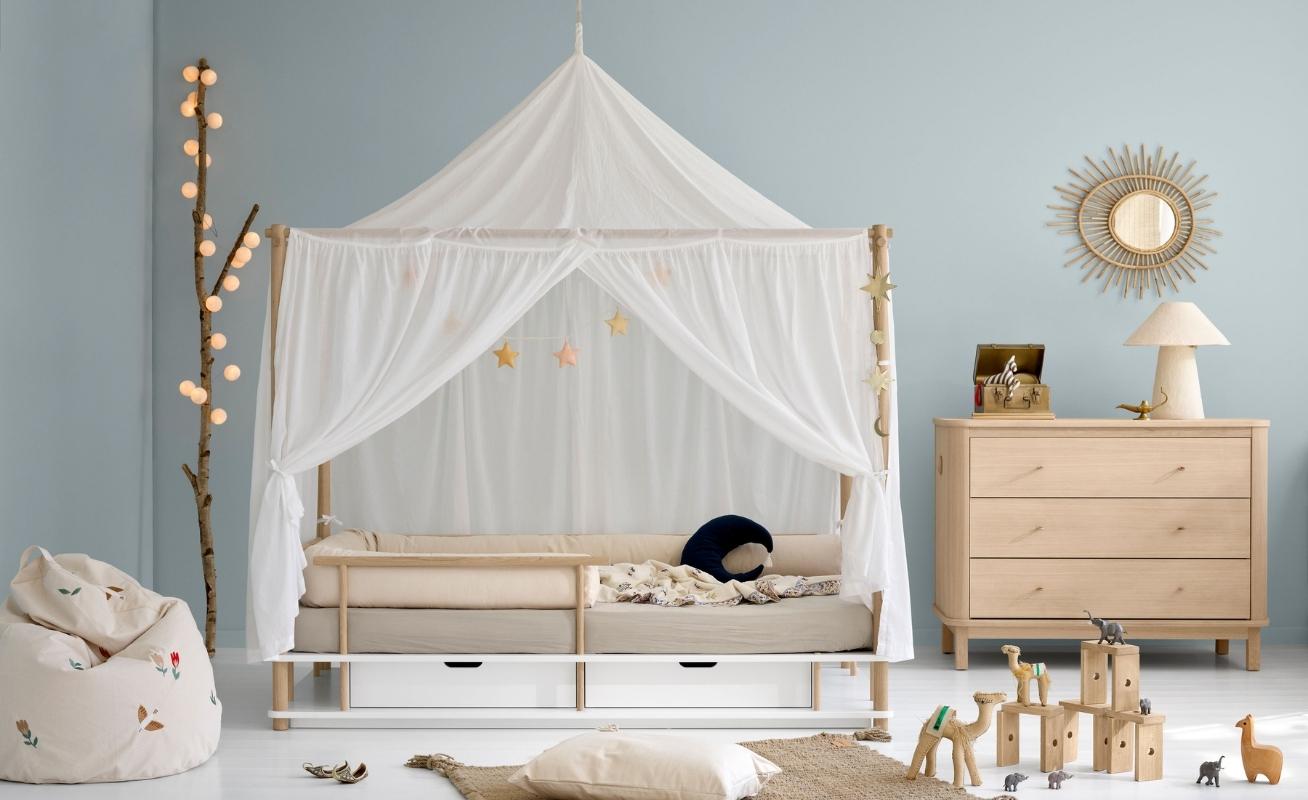
A Montessori bed is suitable from the point at which a child is ready to transition out of a cot, which experts place broadly between 18 months and 3 years. The most reliable signal that a child is ready is when they begin climbing out of the cot — at that point, the drop height of the cot becomes a fall hazard and a low bed is the safer option. A Montessori floor bed or low-profile frame eliminates that drop height entirely, making it one of the gentlest and safest ways to make the transition.
There is no upper age limit for a Montessori-style low bed. Many children continue to use a low platform configuration well into their primary school years, and a well-designed modular system can convert from floor level to a standard platform height, and eventually to a mid-sleeper or loft, as the child grows and the room’s needs change.
Yes, when used appropriately and purchased from a certified supplier. The low height of a Montessori bed is itself a primary safety feature — a child who rolls out of a floor-level or near-floor-level bed faces a drop of centimetres rather than the 60 to 80 centimetres typical of a standard bed frame.
Key safety considerations when choosing a Montessori bed include:
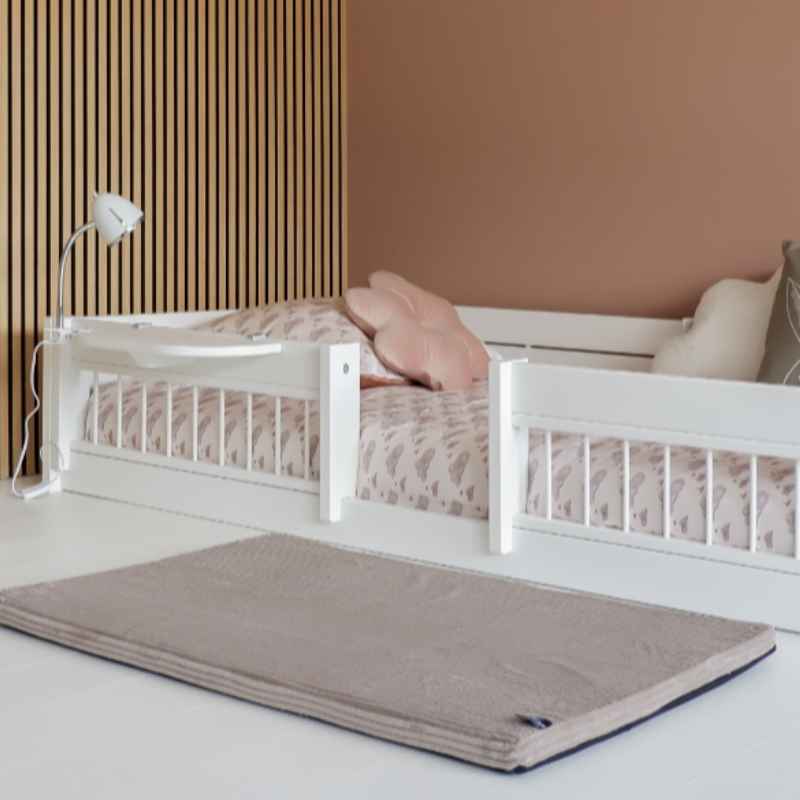
Yes — and in many ways, a Montessori or low-profile bed is particularly well-suited to the compact bedrooms typical of Singapore HDB flats and condominium apartments. A floor-level or near-floor-level bed has a minimal visual footprint and creates a sense of openness in a small room that a standard elevated bed frame does not. There is no under-bed void to manage, and the low profile makes the room feel larger than it is.
For families in smaller HDB units where the children’s bedroom may be 8 to 10 square metres, a modular system that begins as a Montessori configuration and converts to a loft or mid-sleeper as the child grows is a particularly efficient investment. The loft configuration, when the child is old enough, reclaims the floor area beneath the bed for a desk or play space — transforming the same footprint into a significantly more functional room.
Singapore’s tropical climate introduces one further consideration that is easy to overlook: materials. MDF and composite board — used in the majority of budget and mid-range children’s beds sold in Singapore — are susceptible to swelling, warping, and degradation in sustained heat and humidity. Solid wood, particularly solid Scandinavian pine, is dimensionally more stable in tropical conditions, more durable over time, and free from the formaldehyde off-gassing associated with some composite board products. For a bed that a child will sleep in for a decade or more in Singapore’s climate, the material choice is not a minor detail.
A note on mattress sizing for Singapore parents: Kühl Home’s Lifetime Kidsrooms beds use European dimensions, not the local Singapore standard. Most Lifetime models — including the Montessori configuration — require a 90cm x 200cm mattress. This is 10cm longer than the standard local Singapore single mattress of 91cm x 190cm, and the difference is enough to leave a visible gap at the end of the frame if the wrong size is purchased.
A standard toddler bed is typically a scaled-down version of a regular bed frame, often raised 30 to 40 centimetres off the floor and fitted with fixed guardrails on both sides. It is designed to be a transitional piece — used for a year or two before the child moves to a standard single bed. A Montessori bed, by contrast, is intentionally low to the ground, prioritises the child’s independence of movement, and in a quality modular system does not need to be replaced — it evolves with the child through multiple configurations over many years.
For Singapore families weighing the two options, the modular longevity of a Montessori-origin system is a significant practical advantage. A dedicated toddler bed is an additional purchase before the permanent bed — a step that a well-designed modular system like Lifetime Kidsrooms eliminates entirely.
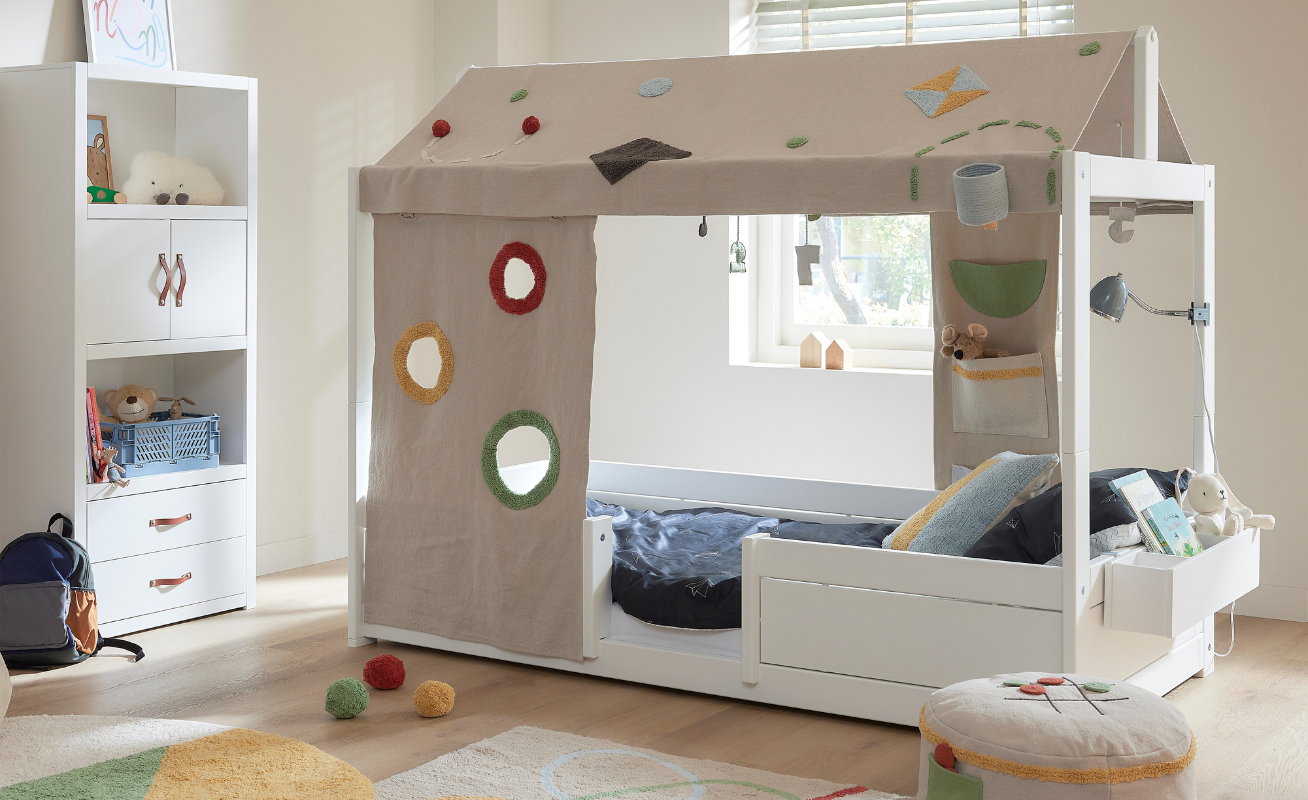
Kühl Home carries Lifetime Kidsrooms and Oliver Furniture — both Danish brands manufactured in Denmark from solid Scandinavian pine, TÜV certified, and finished in non-toxic paint. The Lifetime Kidsrooms Montessori bed is the entry configuration of a modular system designed to grow with the child from toddlerhood through to the teenage years, converting progressively to a platform bed, mid-sleeper, loft, or bunk by adding components to the existing frame rather than replacing it. The warranty runs up to 15 years, which reflects both the quality of the materials and the longevity the system is built to deliver.
Visit the Kühl Home showroom at 100E Pasir Panjang Road #01-01 to see the Lifetime Kidsrooms Montessori bed and the full range of configurations in person. No appointment is needed. Open Monday and Wednesday to Saturday 10am to 6pm, Sunday and public holidays 12pm to 6pm. To ask questions before visiting, message us on WhatsApp at +65 8401 1875 and our team will be happy to help.
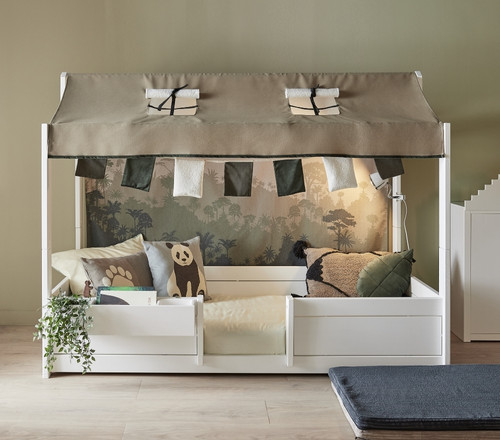
What is a Montessori bed? A Montessori bed is a low or floor-level bed designed to allow a young child to get in and out independently, without risk of falling from height. It is rooted in Montessori educational philosophy, which emphasises a child’s autonomy and freedom of movement. It is typically used from the cot-to-bed transition at around 18 months to 3 years of age.
Is a Montessori bed suitable for a small Singapore HDB bedroom? Yes. A floor-level or near-floor-level Montessori bed has a minimal visual footprint and works well in compact Singapore bedrooms. A modular system that begins as a Montessori configuration and converts to a loft or mid-sleeper as the child grows is particularly efficient for smaller rooms, as the loft configuration eventually reclaims floor space for a desk or play area within the same footprint.
Why is solid wood better than MDF for a children’s bed in Singapore? Solid Scandinavian pine is dimensionally more stable in Singapore’s tropical humidity than MDF or composite board, which can swell, warp, and degrade over time in sustained heat and moisture. Solid wood is also free from the formaldehyde off-gassing associated with some composite materials — an important consideration for a bedroom environment where a child spends eight to ten hours a day.
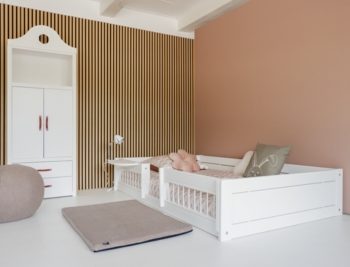
Walk into any Singapore parenting forum or Facebook group today and the Montessori floor bed comes u...
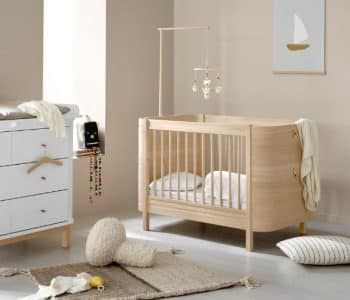
The safest baby cots for Singapore nurseries carry independent TÜV certification, are built from sol...
Choosing a baby cot is one of the first and most consequential furniture decisions new parents make....
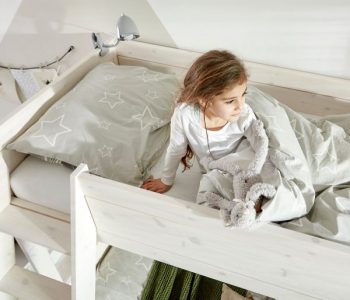
Choose a bunk bed when two children share a room and sleeping capacity is the priority. Choose a lof...
The shift towards home learning in Singapore has quietly changed what a child’s bedroom or study spa...
When buying a children's bed in Singapore, prioritise safety certification, material quality, mattre...
Please fill out the form below to receive our Catalogue.
There are no reviews yet. Be the first one to write one.