


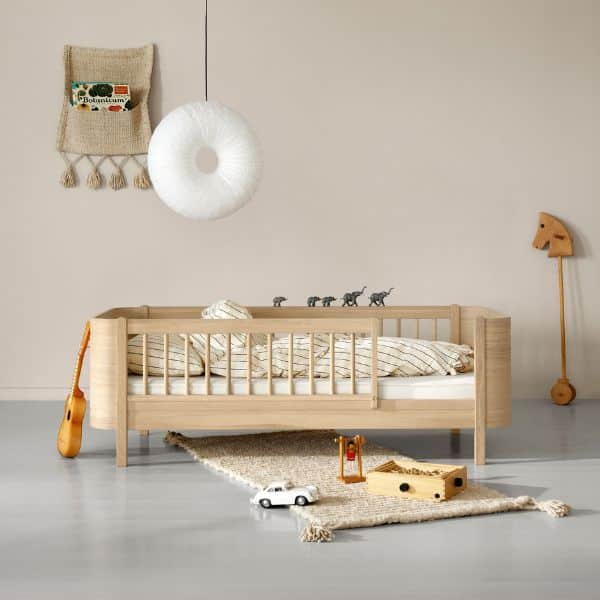
Most toddlers are ready to move from a cot to a bed somewhere between 18 months and 3 years of age, but the right time depends more on your child’s behaviour and development than on age alone. The clearest signal is when your child begins climbing out of the cot — at that point, the cot has become a fall risk and transitioning to a low bed is the safer option.
Age is a useful guide, but readiness varies significantly between children. A child who is not yet climbing out of the cot and is sleeping well is generally fine to remain there until closer to three, while a child who is regularly attempting to climb out at 18 months may need to transition sooner for safety reasons. There is no developmental disadvantage to making the move earlier or later within this range, provided the child is ready and the bed is safe.
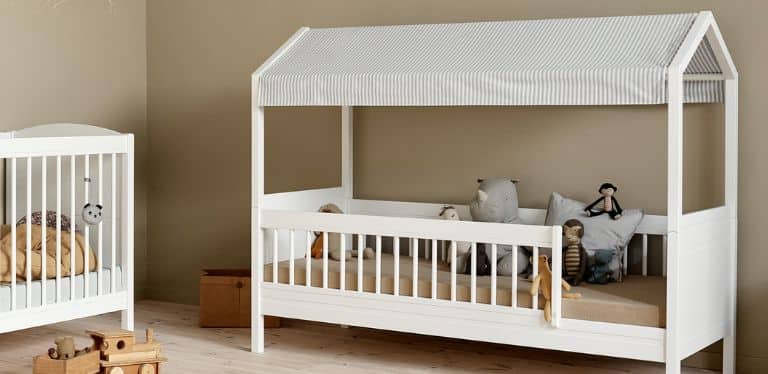
Readiness tends to show up in a combination of physical and behavioural cues rather than a single clear signal. The most reliable signs that your toddler is ready to transition include:
• Climbing out of the cot — this is the most urgent signal, as a fall from cot height poses a genuine injury risk
• Consistent, settled sleep patterns — a child who sleeps reliably through the night is less likely to be disoriented by a change in sleeping environment
• Ability to follow basic instructions — understanding “stay in bed” and responding to it makes the transition significantly smoother
• Expressing interest in a big bed — particularly if an older sibling has one, or if the child has seen one at a friend’s home
• Potty training — if your child is toilet training and needs to get up independently at night, a bed they can get in and out of safely is a practical necessity
• The cot is becoming physically too small — if your child’s feet are regularly touching the end of the cot, the fit has been outgrown
If none of these signs are present and your child is sleeping well in the cot, there is generally no urgent reason to rush the transition.
According to guidance from child sleep researchers, staying in a cot until the child is closer to three — provided they are not climbing out — tends to support more settled sleep, as the enclosed environment of a cot provides a natural boundary that keeps many toddlers from getting up and wandering. Moving too early, before a child has the self-regulation to stay in bed, can disrupt sleep patterns for both child and parent. That said, once a child is climbing out, the safety calculation changes entirely and the transition should not be delayed.
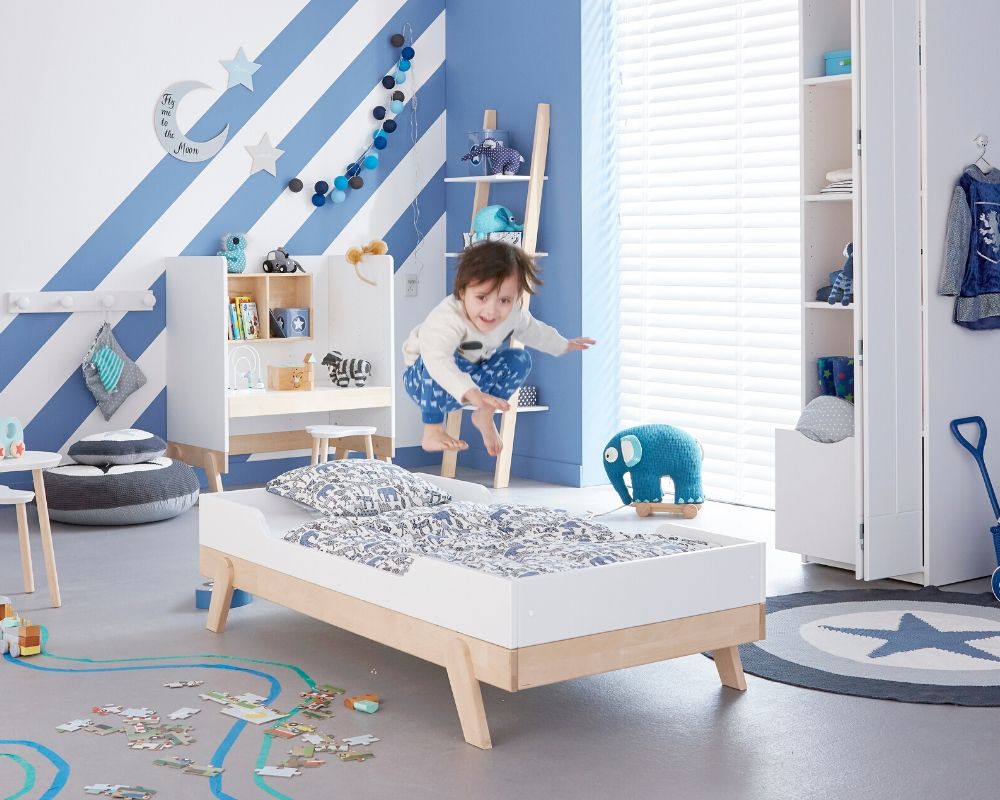
The transition to a bed introduces a new set of safety considerations that the cot managed automatically. Key steps to make the move as safe as possible:
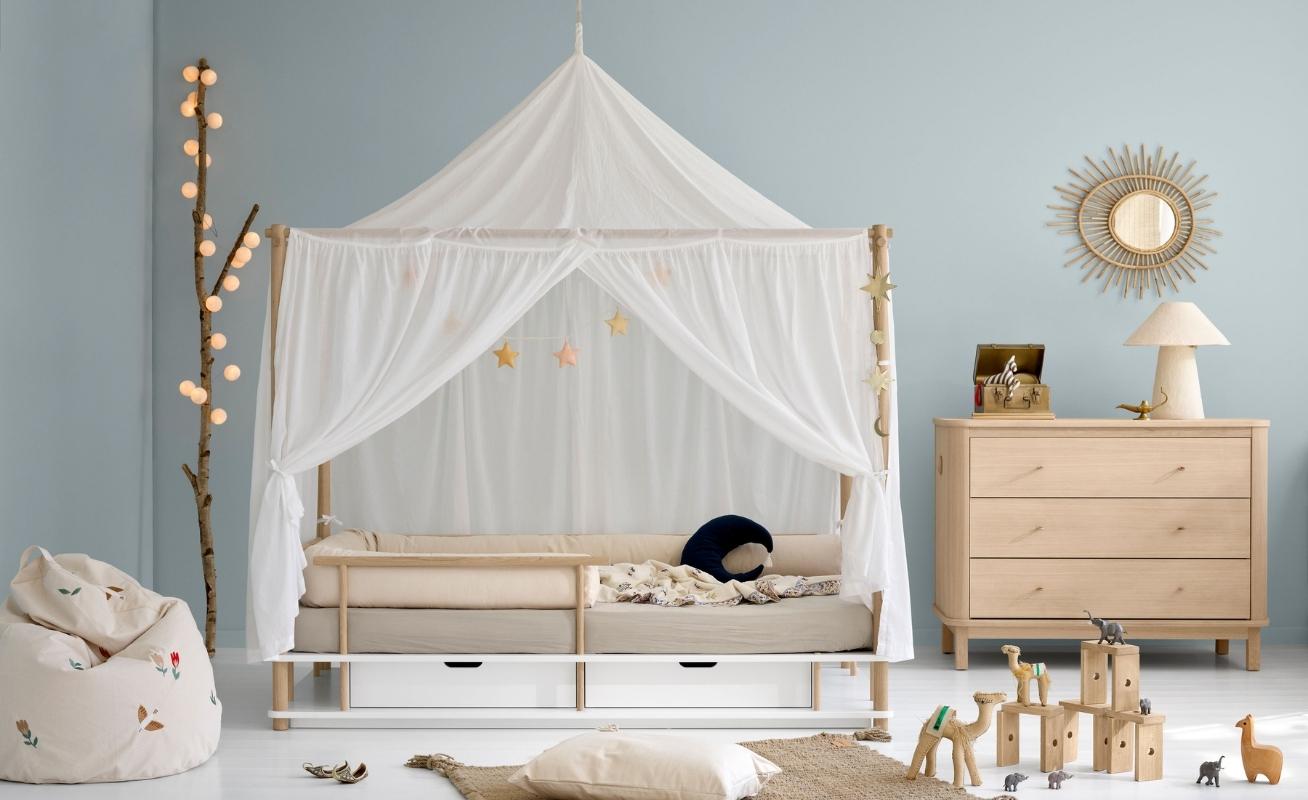
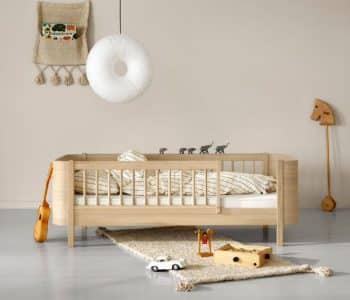
• Choose a bed with a low profile — a Montessori-style floor bed or a low platform bed minimises fall height during the adjustment period
• Fit a bed guard rail on any bed that is raised off the floor, until the child is consistently staying in bed through the night
• Childproof the bedroom itself, since your child can now get out of bed independently — secure furniture to walls, cover plug sockets, and ensure the bedroom door can be monitored
• Maintain the existing bedtime routine as closely as possible — the bed is new, but the routine should stay the same to provide continuity
• Involve the child in the choice where possible — choosing their own bedding or seeing the bed in a showroom before it arrives at home helps build positive anticipation rather than resistance
For Singapore families making this transition, a low-profile bed that the child can get in and out of independently is almost always the right starting point. The two most practical options are a Montessori floor bed — which sits at or very close to floor level — or a low platform bed with a simple bed guard rail. Both options eliminate the drop height that makes standard adult-height beds unsuitable for toddlers.
In Singapore’s HDB flats and condominium apartments, where children’s bedrooms are often compact, the choice of bed also needs to account for room dimensions from the outset. A bed that converts and extends as the child grows — rather than one that will need to be replaced in two or three years — is both more economical and a better use of limited space. It is also worth considering the material the bed is made from. Singapore’s tropical humidity accelerates the deterioration of MDF and composite board, which can swell, warp, and off-gas over time. Solid wood is significantly more stable in these conditions and, with quality finishes, requires minimal maintenance.
One further practical note specific to Singapore: mattress sizing. Many children’s beds sold locally use the standard Singapore single size of 91cm x 190cm. If you are purchasing a European children’s bed, confirm the required mattress dimensions before buying — the sizing is often different, and sourcing the wrong mattress is a frustrating and avoidable problem.
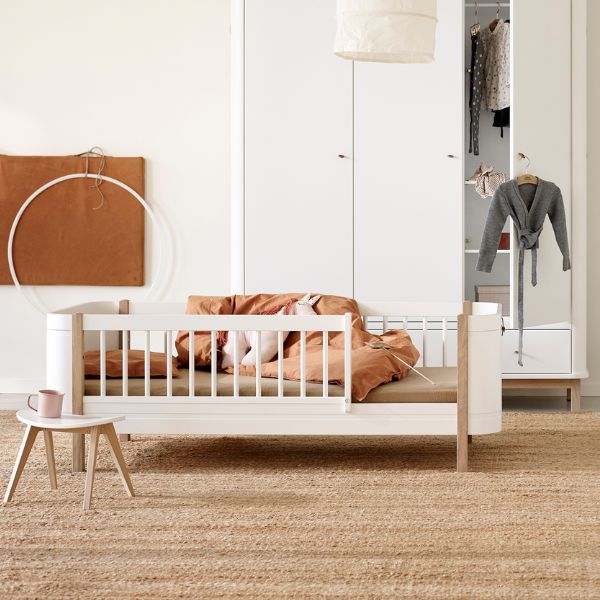
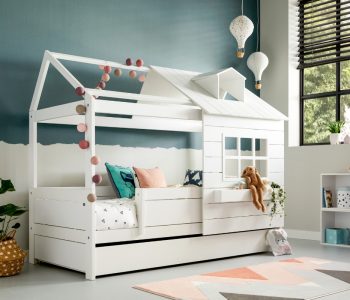
Kühl Home carries Lifetime Kidsrooms and Oliver Furniture — both Danish brands made from solid Scandinavian pine, TÜV certified, and finished in non-toxic paint. The Lifetime Kidsrooms system begins with a Montessori floor bed configuration that sits low enough for a toddler to get in and out independently and safely, and converts progressively into a platform bed, mid-sleeper, loft, or bunk as the child grows — with no need to replace the frame at each stage. The warranty runs up to 15 years, which reflects the structural integrity the system is built to.
The system is trusted by Singapore families since 2015. Oliver Furniture offers a complementary range at a fixed price point with no discounts — both brands are available to view in full-scale room settings at the Kühl Home showroom.
If you are approaching the cot-to-bed transition and want to see the options in person, visit the Kühl Home showroom at 100E Pasir Panjang Road #01-01 — no appointment needed. Open Monday and Wednesday to Saturday 10am to 6pm, Sunday and public holidays 12pm to 6pm. To ask questions before visiting, message us on WhatsApp at +65 8401 1875 and our team will help you find the right starting configuration for your child’s age and your room dimensions.
What is the earliest age I can move my toddler to a bed?
Most children are ready between 18 months and 3 years. Moving before 18 months is generally not recommended unless there is a specific safety reason. If your child is not yet climbing out of the cot and is sleeping well, there is no developmental reason to rush the transition before they are ready.
My toddler keeps climbing out of the cot — what should I do?
Once a child is consistently climbing out of the cot, the cot has become a fall hazard and the transition to a bed should be made promptly. A low Montessori-style floor bed is the safest immediate option, as it eliminates the drop height and allows the child to get in and out independently without risk of injury.
Is solid wood better than MDF for a children’s bed in Singapore’s climate?
Yes, for Singapore’s tropical humidity, solid wood — particularly solid Scandinavian pine as used in Lifetime Kidsrooms — is significantly more stable and durable than MDF or composite board. Composite materials are more susceptible to swelling, warping, and off-gassing in sustained heat and humidity. Solid pine with a non-toxic finish is both safer and longer-lasting in Singapore’s conditions.

A Montessori bed is a low or floor-level bed designed to allow young children to get in and out inde...
Most toddlers are ready to move from a cot to a bed somewhere between 18 months and 3 years of age, ...
The best place to buy a toddler bed or Montessori bed in Singapore is a specialist children's furnit...
Designing a child’s bedroom is one of the most rewarding — and deceptively complex — projects in a h...
Choosing the right bed is one of the most important decisions when designing your child’s bedroom. I...
Choosing the right study table is one of the most important investments parents can make for their c...
Please fill out the form below to receive our Catalogue.
There are no reviews yet. Be the first one to write one.